

White papers
Stay up to date on the latest topics and gain industry insights from HMS' experts through our white papers, providing valuable knowledge and analysis.
How Anybus Wireless Bridge II helped modernize an EV battery production line

A leading EV battery manufacturer needed a reliable way to connect Siemens PLCs with robot-mounted tooling on an automated battery assembly line. Frequent robot movement caused Ethernet cable wear, resulting in maintenance issues and limiting production flexibility. By replacing wired Ethernet with the Anybus Wireless Bridge II, the company eliminated cable-related failures, improved robot mobility, and created a more flexible production environment.
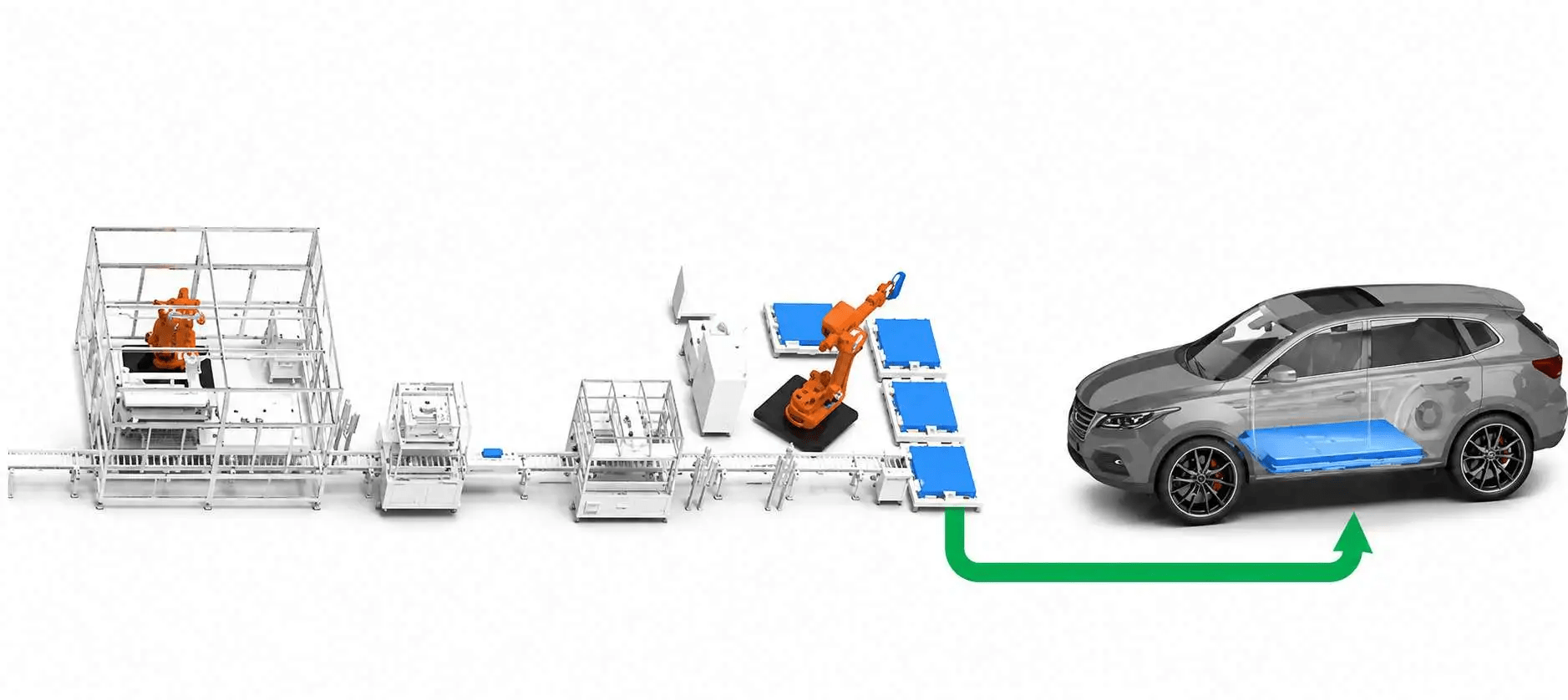
In one of its EV battery module assembly lines, robots perform precise pick-and place and assembly tasks. The robot tooling incorporates valve islands and remote I/O modules, while control commands originate from Siemens PLCs installed along the production line. Reliable, real-time communication between the PLC and the robot
tooling is essential to ensure accurate and consistent operation.
The limitations of wired Ethernet
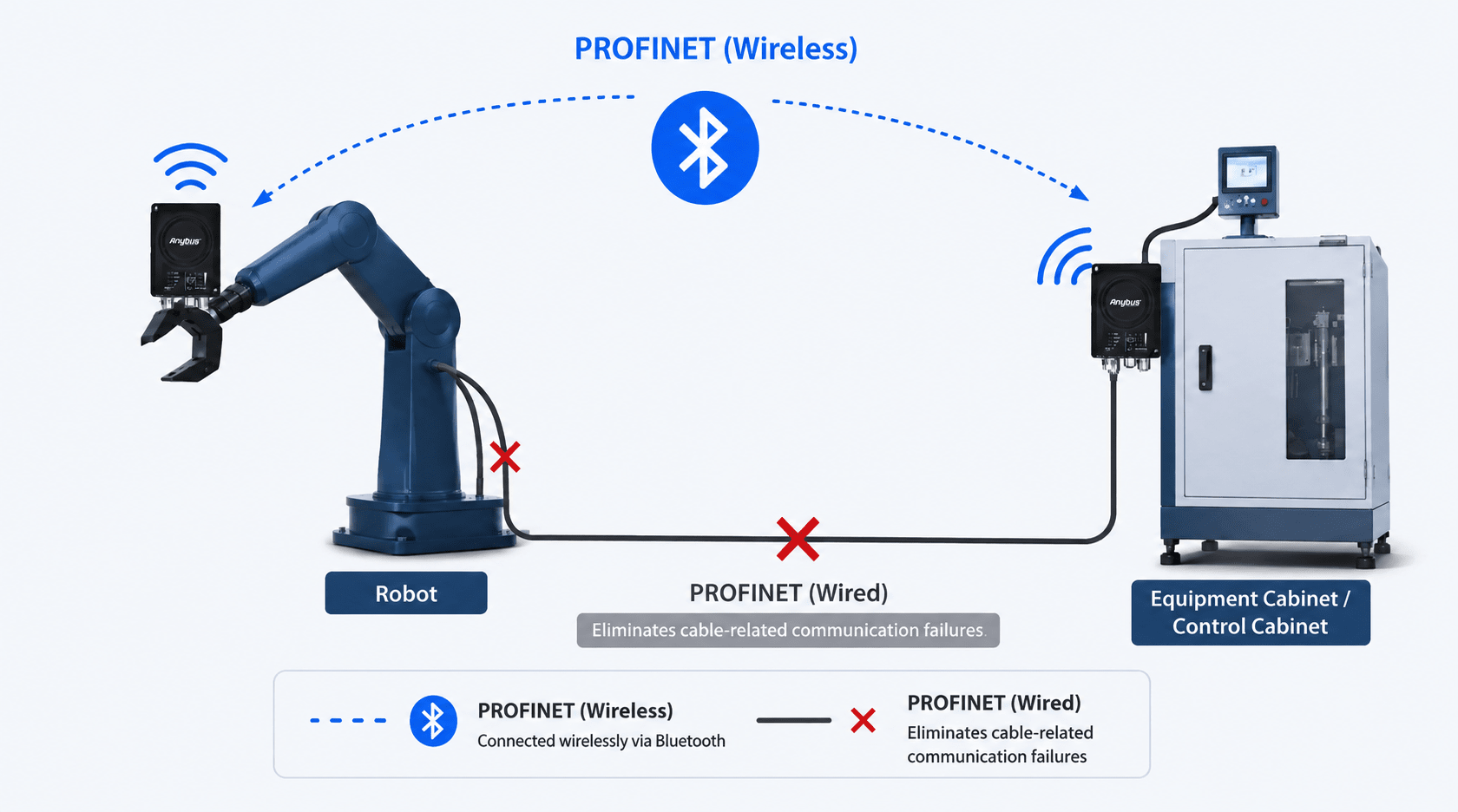
Initially, communication between the PLC and the robot tooling was achieved using Ethernet cables. However, as the production line continued to operate, several challenges emerged.
Frequent failures affecting production
Continuous robot movement caused repeated cable bending, resulting in cable wear, broken conductors, and loose connections. Troubleshooting and replacing damaged cables required production interruptions and reduced overall efficiency.
Limited robot movement and reduced flexibility
The physical presence of Ethernet cables restricted the movement of the robotic arms. Some motion paths that
could have improved assembly efficiency could not be implemented due to cable constraints, making future production line upgrades more difficult.
After evaluating reliability, deployment costs, and real world performance, the EV battery manufacturer selected
the Anybus Wireless Bridge II from HMS Networks as its preferred solution. By replacing the physical Ethernet cable
with an industrial-grade wireless link, the company addressed the main challenges affecting production reliability and
flexibility.
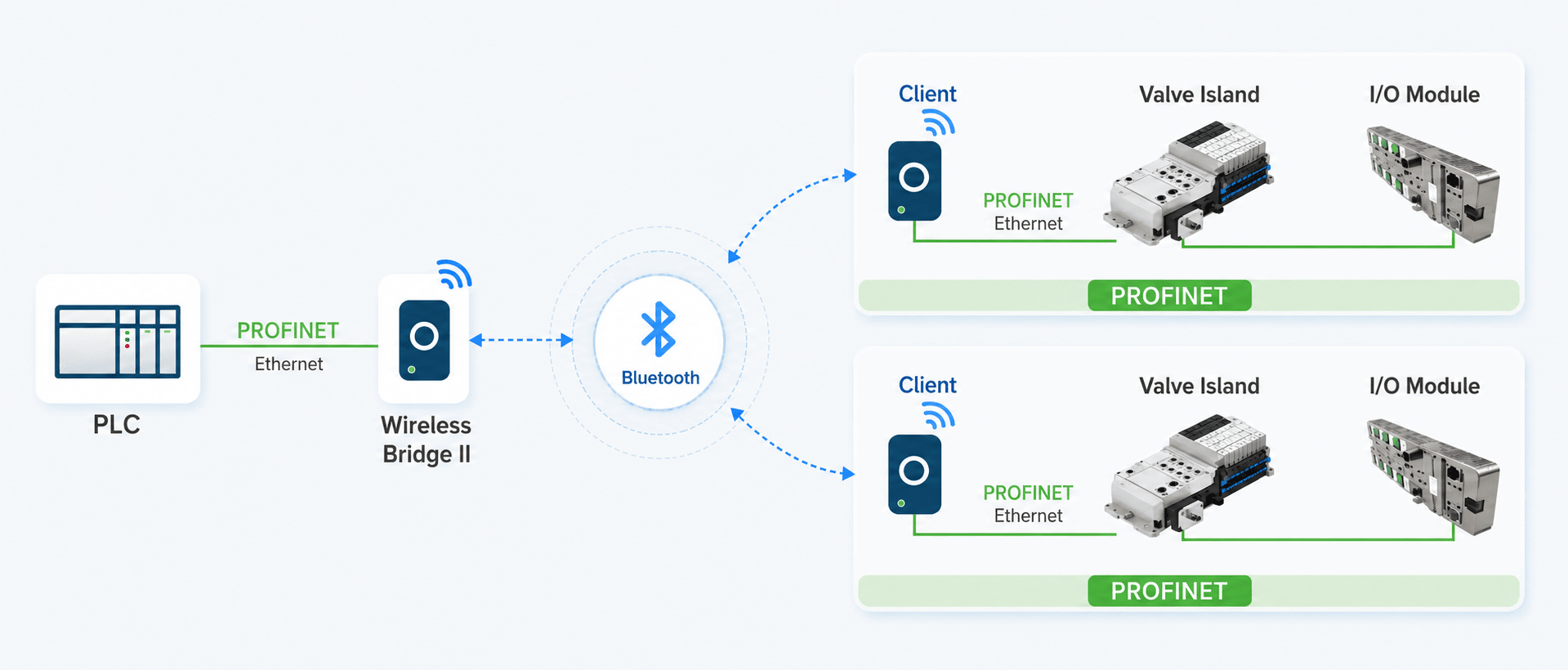
Eliminate cable-related failures
Using point-to-point wireless bridging technology, the Anybus Wireless Bridge II established a stable wireless connection
between the PLC and the robot tooling, completely replacing the original Ethernet cable. This removed the root cause of
unplanned downtime associated with cable wear, breakage, and connector failures.
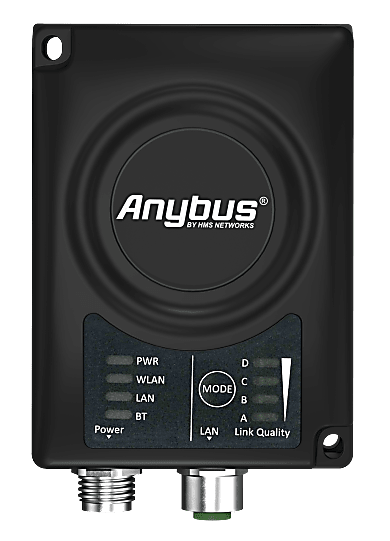
Industrial-grade reliability
Designed specifically for industrial environments, the Anybus Wireless Bridge II features IP66/IP67 protection
and a wide operating temperature range. The solution is built to withstand vibration and electromagnetic
interference commonly found in production environments. The communication link also meets industrial safety
requirements such as PROFIsafe, ensuring low-latency, realtime communication.
Greater flexibility and improved efficiency
Removing the ethernet cable eliminatemovement restrictions on the robotic arm, allowing robot motions to be optimized for greater assembly efficiency. The wireless solution also simplified future production line modifications, as equipment could be moved or production layouts changed without the need for new cabling.
The solution is now operating reliably on multiple EV battery module assembly lines, with annual deployments reaching
thousands of units.
1. Improved production reliability
By replacing Ethernet cables with a wireless connection, the manufacturer significantly reduced the risk of
communication failures caused by cable wear, breakage, or loose connectors. This improved production continuity and
reduced maintenance requirements.
2. Increased production flexibility
Without cable constraints, robots gained greater freedom of movement, enabling more efficient motion paths and
supporting future production line upgrades. Equipment relocation and layout changes could be completed without
costly rewiring.
3. Proven scalability
The solution has been successfully deployed across multiple production lines and has reached annual usage volumes
of thousands of units, demonstrating both reliability and scalability in demanding manufacturing environments.
Proven wireless expertise
Anybus wireless products are used in manufacturing applications worldwide, from automotive production lines in
Europe to EV battery factories in China.
Reliable products and support
The Anybus Wireless Bridge II combines industrial-grade reliability with plug-and-play simplicity, backed by HMS
wireless specialists who supported the project from testing through deployment.
As manufacturers continue to increase production flexibility and automation, wireless communication is becoming an
attractive alternative to traditional cabling. By replacing Ethernet cables with Anybus Wireless Bridge II, this EV battery manufacturer improved reliability, increased operational flexibility, and simplified future production line upgrades.
Country: China
Solution: Industrial wireless
Industries: New energy / EV batteries
Products: Anybus Wireless Bridge II
Stay up to date on the latest topics and gain industry insights from HMS' experts through our white papers, providing valuable knowledge and analysis.

Our products solve everyday industrial communication problems. Discover how our customers have improved their business with HMS case studies.
HMS communication solutions help thousands of companies solve specific communication problems in many different industries and applications.